

Don't let pain hold you back from doing
what you love.
Most people with knee pain are told one of a few things: stop running, don't let your knee go past your toes, switch to biking or swimming, or rest until it feels better.
We think most of that advice makes the problem worse.
Here's the truth: your knee isn't broken. Your pain isn't permanent. It's a sign that your knee isn't prepared for the demands being placed on it. And the solution isn't to avoid those demands forever — it's to build your knee's capacity to handle them.
The pain-rest-pain cycle is real. You take time off. It feels better. You go back to what you love. The pain returns — sometimes worse. Why? Because nothing changed. You took water out of the cup without making the cup bigger.
Running doesn't ruin your knees. Inactivity does.
Avoiding impact doesn't protect your joints — it weakens the muscles, tendons, and tissues that support them.
And all those clamshells, IT band stretches, and glute bridges you've been doing? They're not bad. They're just not the long term solution.
The solution is loading your knee the right way — progressively, intentionally, and starting where you actually are.
Imagine working out without worrying about knee pain.
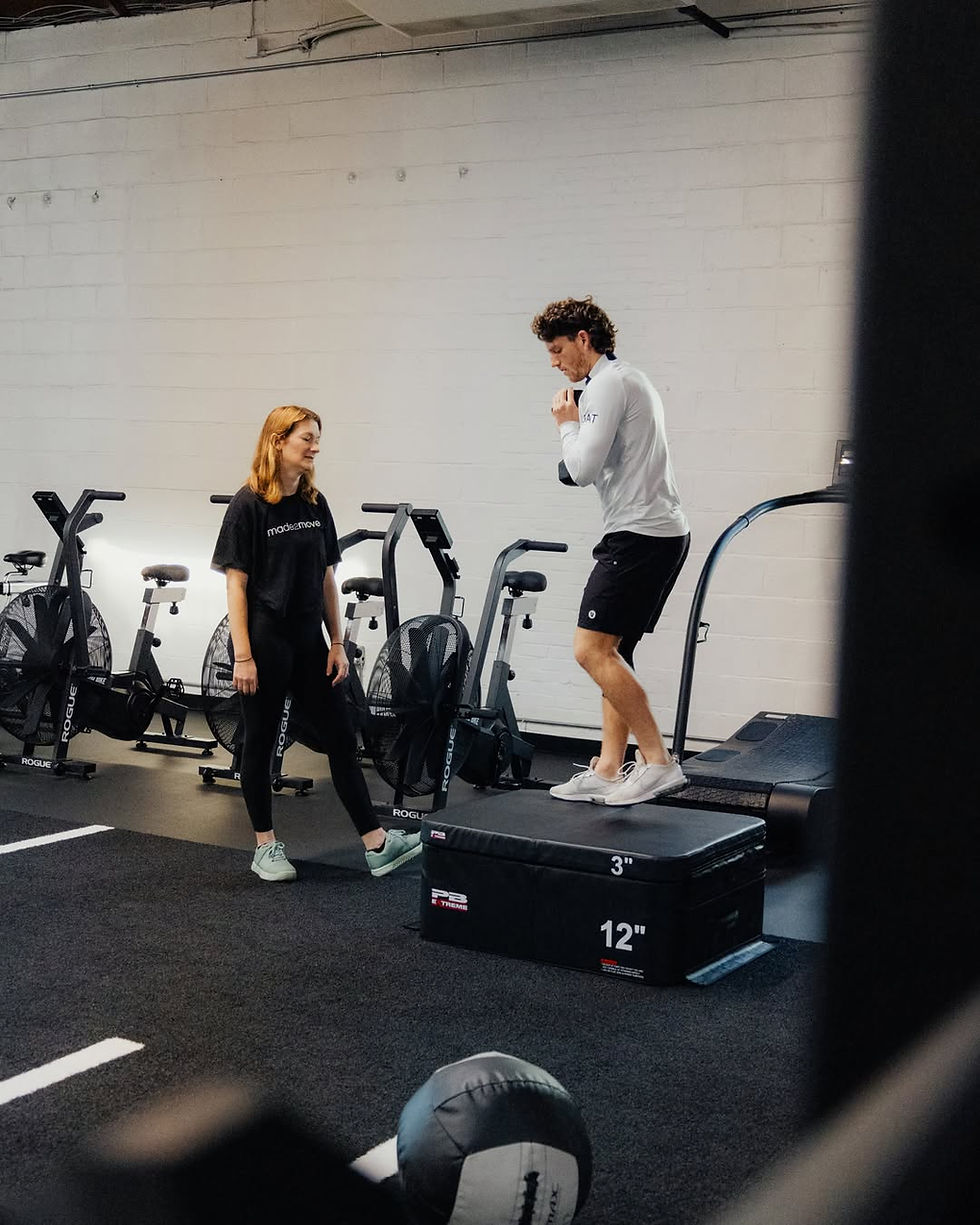
This is for you if:
• You have knee pain that keeps coming back no matter how much you rest, stretch, or foam roll
• You've been told to stop running, stop squatting, or stop doing the things you love — and you're not willing to accept that
• You did PT before, did everything you were told, and still didn't get better — because the program was wrong, not you
• You're stuck in the pain-rest-pain cycle and tired of temporary fixes
• You're a runner, HYROX athlete, CrossFitter, volleyball player, or active person whose knee is keeping you from training the way you want
• You're scared your knees are damaged or worn out — and you need someone to tell you the truth about what's actually going on
HOW WE WORK WITH KNEE PAIN
When you come to Made2Move Downtown with knee pain, we start with a full assessment — not just where it hurts, but what your knee isn't prepared to handle and why.
We use our RAMP framework:
Relative Rest: we modify, we don't eliminate. You keep moving at a level that doesn't spike your symptoms. Taking water out of the cup without making the cup smaller.
Assess: we test strength, single-leg stability, force absorption, and plyometric capacity. Running is a series of repetitive single-leg jumps — so we need to know if your knee can actually handle that demand.
Move with Load: targeted strength work, starting with what your knee can tolerate. Quad-focused — because that's what most knee rehab skips. Then we progress to single-leg work, plyometrics, and sport-specific demands.
Progress: gradually increase load, volume, and complexity. Monitor how your body responds. Adjust based on data.
Eva came to us with a meniscus tear and three previous knee surgeries. She ran a 10k, went on long beach walks, swam, and jumped all night at a concert — zero knee pain. That's what building real capacity looks like.
After a 90 minute assessment with a Doctor of Physical Therapy, we'll build you a plan that not only solves your pain, but prevents it from coming back.
From Our Patients

Eva came to Made2Move Downtown with a meniscus tear — and three previous knee surgeries behind her. She'd been to a million PTs, she said, and "nothing had come close to what she found here."
Working with Elliot and Casey, she rebuilt the strength and capacity she'd been told might never fully return.
"I never thought it was possible to live without chronic knee pain until meeting Elliot and Casey at Made2Move. I have ran a 10k, gone on countless long beach walks, swam and even jumped all night at a concert with zero knee pain."
Three surgeries. A meniscus tear. And now — a 10k, long beach walks, and jumping all night at a concert. That's what building real capacity looks like.
Other Services

ACL Rehab

HYROX & Group Fitness Rehab


About the Author
Hannah Breal, PT, DPT is the co-owner of Made2Move Physical Therapy and author of Letters on Pain, Movement & Health — a weekly newsletter for athletes and active adults who want to move better and stay healthy for life.

KEEP LEARNING.
KEEP GROWING.