
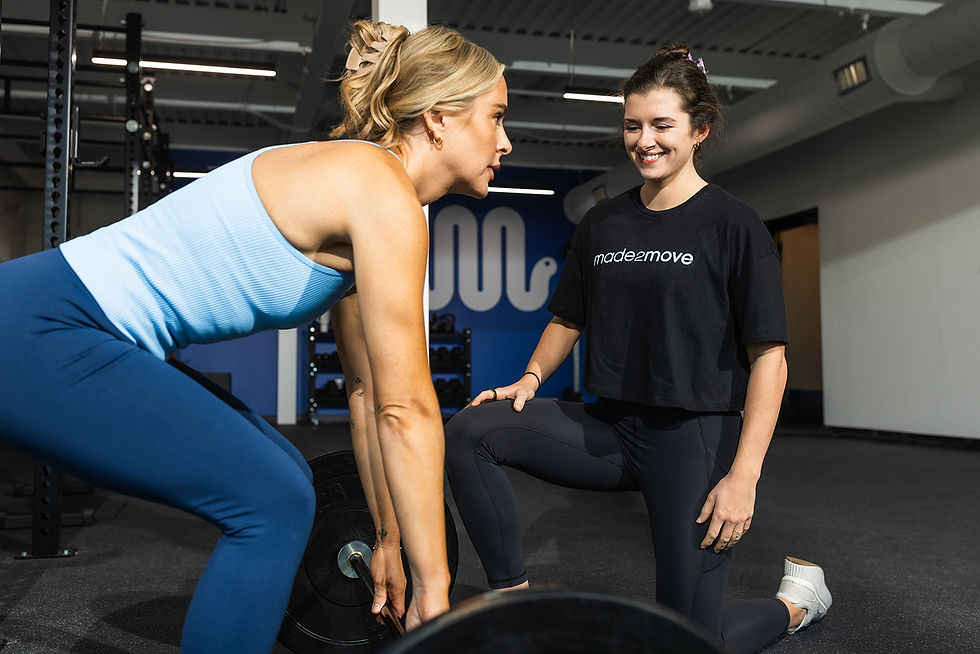
Don't let pain hold you back from doing
what you love.
In almost every fitness class, the instructor says it: "protect your back." "Stay in neutral spine." "You shouldn't feel it in your back." And after years of hearing that — and after one bad flare-up — most people start organizing their whole life around avoiding their back.
We think that's the problem, not the solution.
Your back isn't fragile. It's undertrained. Every time you avoid loading it, you make it less capable of handling the demands of real life. And unprepared backs get hurt doing the dishes.
The cycle goes like this: told your back is fragile → avoid loading it → back gets weaker → gets hurt more easily → confirms the belief → protect it more. We see this every single day.
The things that actually hurt you aren't the deadlifts or the squats. They're the fear based narratives that become beliefs, and the behaviors those beliefs create.
Your back adapts and responds to loading — just like every other part of your body. The goal isn't to protect it forever. It's to prepare it.
Imagine moving without worrying about back pain.
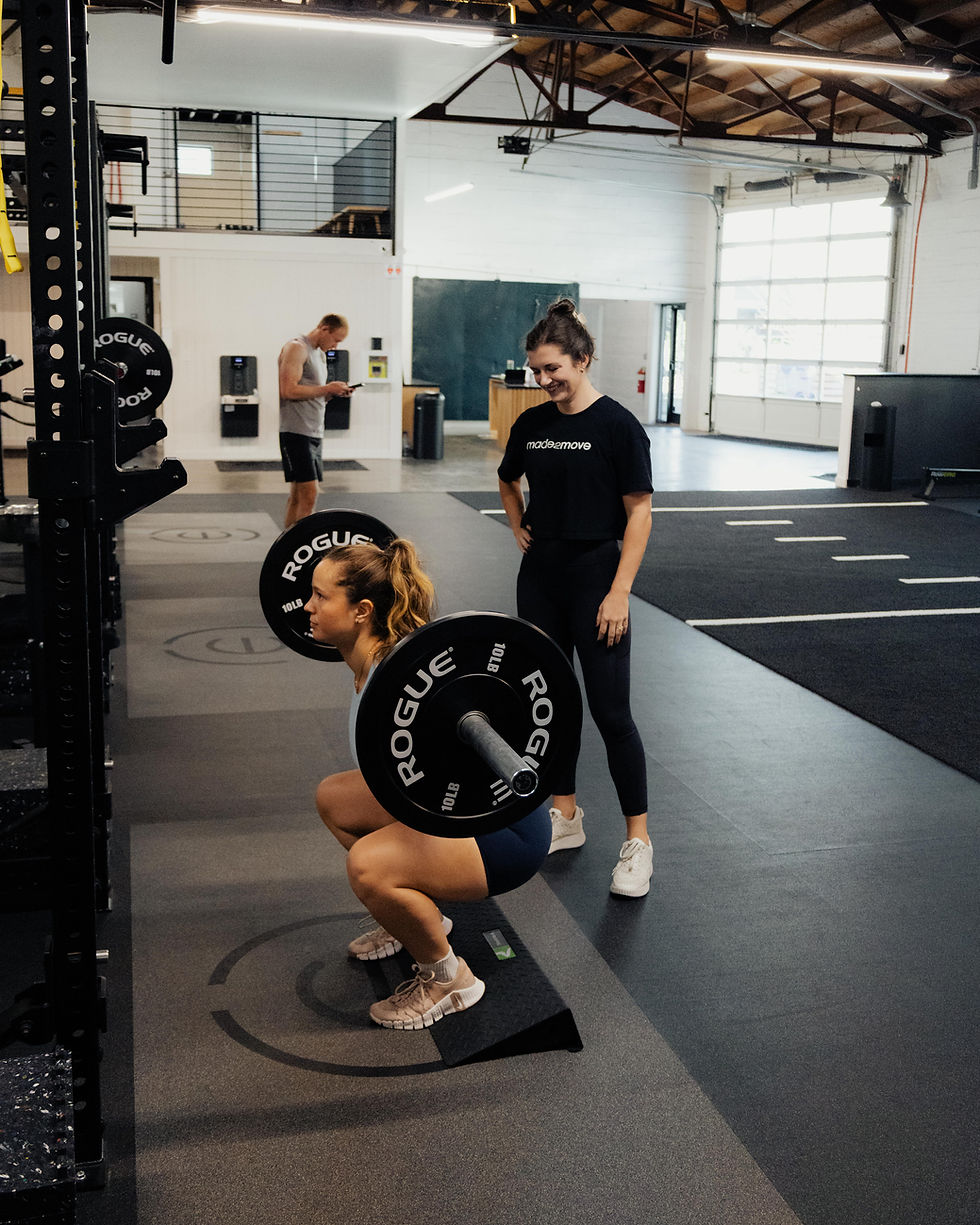
This is for you if:
• You've been dealing with back pain on and off for years and feel like you just have "a bad back"
• You stopped deadlifting, squatting, or doing certain movements because someone told you to — and you haven't gone back
• You've tried PT, chiro, dry needling, massage, injections — and the pain keeps coming back
• You're scared to pick something up off the floor, put your shoes on, or sneeze without bracing for the worst
• You're a lifter, CrossFitter, or active person whose back pain is keeping you out of the gym
• You've come in defeated — maybe even convinced nothing will work — but there's still a small part of you that thinks it doesn't have to be like this forever
HOW WE HELP WITH BACK PAIN
When you come to Made2Move with back pain, we're not going to tell you to rest, avoid loading, or stop doing the things you love. We're going to find out why your back isn't handling the demands being placed on it — and build it back up.
After a 90 minute assessment with a Doctor of Physical Therapy, we'll build you a plan that not only solves your pain, but prevents it from coming back.
Step one is calming things down without making you more afraid. You keep moving. We modify, not eliminate. Pain is a data point, not a stop sign.
Step two is building capacity. Progressive loading, starting with what your body can actually tolerate and recover from, and building from there. That usually means the exact movements you've been avoiding — deadlifts, rotation, flexion — done in a way your back can handle right now.
The biggest barrier to recovery isn't your diagnosis. It's the belief system that comes with it. We work on both.
Imaging doesn't tell the full story. You could have a disc herniation, a finding on an MRI, and still get back to everything you love. We've seen it happen hundreds of times.
From Our Patients
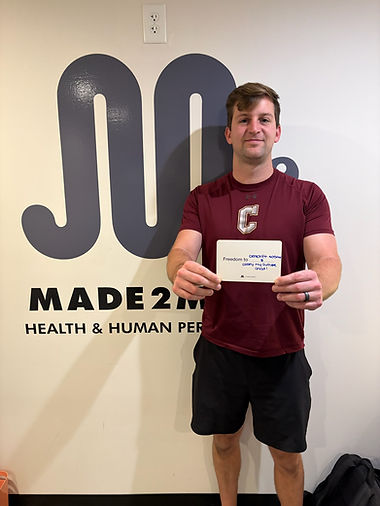
Marlin came to us ready to give up. His back hurt putting his shoes on in the morning. He'd decided he was done with heavy lifting — done with anything demanding physically. He was, in his words, "ready to go out to pasture and just golf."
He finally hurt his back golfing and broke down and asked for help.
On his first day with Dr. Jordan, he was in pain just squatting his bodyweight. He couldn't deadlift a 45lb barbell without grimacing.
"Yesterday I was able to barbell squat 1.5x my body weight for 3. I cannot recommend Made2Move enough. The proof's in the pudding."
That's what happens when you stop protecting and start preparing.
Other Services

ACL Rehab

HYROX & Group Fitness Rehab


About the Author
Hannah Breal, PT, DPT is the co-owner of Made2Move Physical Therapy and author of Letters on Pain, Movement & Health — a weekly newsletter for athletes and active adults who want to move better and stay healthy for life.

KEEP LEARNING.
KEEP GROWING.
BLOGS & FREE RESOURCES:
Blog: She Deadlifted Over 100 Pounds After Years of Back Pain. Here's How.
Blog: Why Everything You’ve Been Told About Back Pain Is Wrong
Blog: Got Back Pain? Here’s Exactly How We Help People Deadlift Again — Without Fear
Blog: 7 Beliefs That Are Holding You Back From Solving Your Pain