What Real Meniscus Tear Rehab Looks Like (Exercises That Work)

About the Author: Hannah Breal, PT, DPT is the co-owner of Made 2 Move Physical Therapy in Charleston and Charlotte. She helps athletes and active adults rebuild strength, mobility, and confidence so they can move pain-free for life.
Made 2 Move Physical Therapy – Charleston | Daniel Island | Mount Pleasant | Charlotte
IMeniscus tears are VERY common and don't mean that you need surgery or that you're going to be in pain forever.
In Part 1 of this series, I shared what I wish everyone knew about meniscus tears.
If you missed it - catch up here!
The 4 Things Meniscus Tear Rehab Needs to Accomplish
When someone comes in with a meniscus tear, there's 4 things we have to accomplish:
restore normal movement and range of motion
strengthen the muscles surrounding and supporting the knee
improve your knee capacity related to your goals
create a plan to gradually get back into full activity/sport
As always, there are a million different exercises and even more ways to do them and your treatment should be unique to YOU.
Here's what that looks like:
1. Restoring Normal Movement & Range of Motion
Knee pain and meniscus tears can cause limited range of motion in either flexion (knee bending) or extension (straightening your knee).
Making Range of Motion More Functional
As that improves, we want to make it more "functional" and challenging.
It's one thing to have full range of motion when your knee is unweighted - it's another to be able to load it and USE it, so here's a few more challenging ways to improve your knee range of motion!
(I know these mention ACL rehab, but these exercises are really helpful for any knee injury!)
2. Strengthen the Muscles Surrounding and Supporting the Knee
Quads
One of our favorite ways to load, isolate, and target the quads is with a weighted knee extension. if you have a significant strength deficit on one side, I'd recommend doing it with one leg at a time. start light, with 2 – 3 sets to fatigue.
Hamstrings
For hamstrings, you can definitely use a machine, or you can start with a standing hamstring curl and progress to a hamstring slider.
The next step would be progressing to a deadlift or RDL.
Squatting
I also want to get my patients squatting normally again - I'd start with a box squat, adjusting the height as needed, and progress to a weighted squat over time. Since this is typically a single leg injury, progressing to single leg exercises is going to be KEY.
Single Leg Strength and Control
With any injury, our muscle coordination and awareness of where our body is in space changes. It's like the wifi signal gets weaker. Being able to control and know where your knee is matters a TON for daily life, exercise, and playing sports!
Here's some of my favorites:
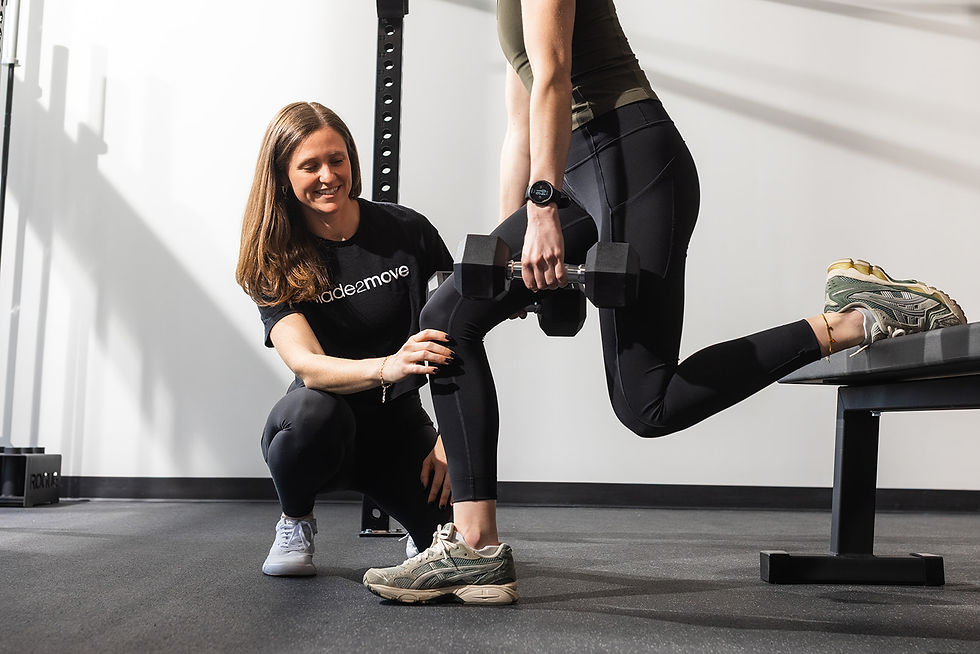
Split Squat -- progress to a rear foot elevated
Step Down -- forward (targets knees) and lateral (targets hips)
and lastly:
3. Progressing Into Plyometrics (Jumping and Landing) and Returning to Run
As your symptoms and strength improves, we need to increase your knee's capacity for force production and force absorption.
This is super important for running, playing sports, and even going down the stairs/curbs. Even if you're not trying to return to high-level sports, you don't wanna skip this.
Start With Both Legs
I like starting with both legs before we progress to single leg, like hopping with both feet or to a plate/box. I use this banded hop all the time to get clients comfortable with jumping again - the band unweights the movement to make it a bit easier!
Then Progress to Single Leg
Then, I'd progress to single leg: banded, then on the ground, then to a plate or box.
One of my favorites is this depth drop. Adjust the height as needed, and as you improve, you can add a vertical jump when you land.
This split squat jump is a great progression into more challenging plyometrics - start without weight first!
What Meniscus Rehab Should Really Look Like
It's normal to be nervous about running, jumping, lunging, squatting, especially soon after an injury, but those movements are not off-limits forever.
What Getting Back to Full Function Looks Like
OKAYYY Hannah that was a LOT
I'm just trying to give you an idea of what meniscus rehab should really look like.
Here's what you need to know:
The key to recovering from a meniscus tear is a personalized exercise PLAN based on your function and symptoms. these exercises should progress over time and should replicate the demands of your life, sport, and goals!
Remember: a meniscus tear doesn't mean you're doomed. You CAN get back to doing the things you love, without worrying about pain.
If you're dealing with knee pain and want a plan that works for your specific goals, feel free to book a consult with us and we'll help ya out like Anita, who's lifting weights and running around with her grandkids again!
Want to understand your body better, move with confidence, and stay active for life?
I write a weekly letter on pain, movement, and health — sharing how I actually think about injuries, training, and taking care of your body (without the fear-based nonsense).
If this sounds helpful, you can sign up to get the letters here.
Written by Hannah Breal, PT, DPT, Co-Owner of Made 2 Move Physical Therapy, helping Charleston and Charlotte move pain-free for life.